Ghoti Magazine
We are looking for strong, polished work that takes risks. We want writing that makes our palms sweat, and gets us arguing. We don’t really care if your work is about the secret life of cheese or your new pair of shoes, just as long as it’s fresh.
Ghoti Magazine
This was their website.
Content is mainly taken from the 2007 archived pages of Ghoti Magazine Issue 10.

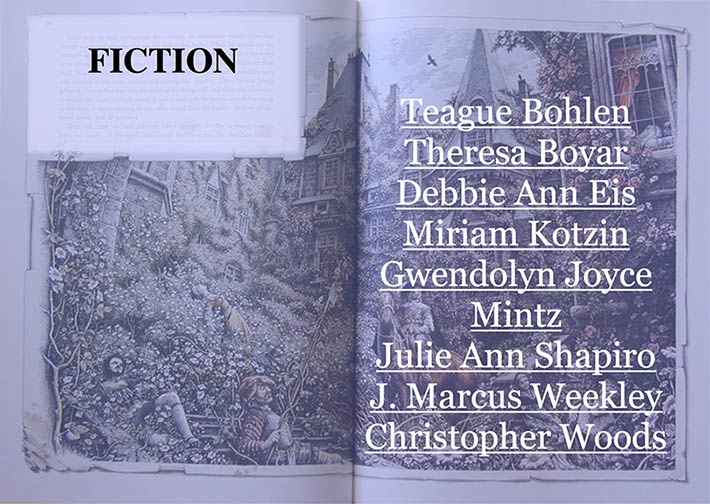
ISSUE 10
|
An Interview With J. F. Connolly
|
|||
| - Conducted by CL Bledsoe | |||
|
CB: Several of your poems describe working in a funeral home, for example, “Growing up in a Funeral Home”. If you don’t mind, tell me a little about your childhood. Was it a family owned funeral home? From what age did you work there? JC: My grandparents owned the main funeral home in Brockton. MA. My father married into the business and ran the second funeral home in Bridgewater, MA, the funeral home that I lived in throughout my childhood. When I was in the ninth grade, the Bridgewater funeral home was sold and my family moved to Brockton, MA. I was the oldest grandchild, and my family expected that I would eventually become an undertaker and take over the family business. I starting working at the funeral home in the ninth grade: washing cars, moving caskets, setting up rooms, cutting the lawn, and doing similar odd jobs. One of my uncles ran a large enterprise distributing cleaning supplies to local businesses so I also spent time working for him in addition to my responsibilities with the family business. That experience was very useful in that I was exposed to many cleaning products that translated perfectly to the upkeep of our facility. When I got my driver’s license at sixteen, I began working funerals and going on “pick ups” with my father. CB: So this probably had a profound affect on your childhood, exposing you to ideas of mortality many of your peers may have been completely unaware of – was this troubling to you? Or did you have problems "fitting in" because of your family's work? JC: Yes, growing up in a funeral home had a profound affect on me because I think that my brother and I saw too much too early. Becoming an apprentice in the trade of death is not the same as learning a trade like, let’s say, plumbing. Now that last statement is rather obvious and perhaps a tad dramatic. The truth, and the honest answer to your question, is that it wasn’t so much the life of growing up in a funeral home as it was growing up in a home with two alcoholic parents. As the poems in the Comstock Review chapbook suggest, my family life was, quite simply put, crazy. A few years ago, my brother, sister, and I were talking about our childhood. My sister and I both commented on the fact that, when we read A Long Day’s Journey Into Night in college, our classmates were shocked. My sister said that something to the effect that reading the play was a “Sunday walk in the park.” My poem “Telling My Sister on How I Taught a Lesson on Child Abuse” is, I suppose, a window to the craziness of my childhood. I did not have trouble “fitting in,” although I was a reticent child who was very angry. As I grew older, I became obsessed with football and boxing—two outlets for the mute rage that I carried with me. My brother and sister and I were all overweight children. My brother and I had the luxury of becoming football players—we were captains of our high school teams—but my sister really is the one who was profoundly affected by our childhood. CB: Is your writing primarily autobiographical? JC: I think that my best work is autobiographical. As the poems suggest, my childhood was psychologically chaotic and rather tragic in some respects. My parents died young: my mother died six weeks after turning fifty and my father died at fifty-three, and, most noteworthy, my mother died exactly six weeks to the day after my father died. Capturing the psychological chaos of the family alcoholism, the Irish Catholic brainwashing, and growing up in a “death house” gives my best poems their power. The artistic challenge has been to earn the power that comes on tap because of the subject matter of the poems. Now, of course, I have many poems that are more imaginative works and are not “autobiographical” per se. However, the poems that mean the most to me, the ones that seem so much more authentic to me, are the poems that are autobiographical. I really do wish that I had more range in my work, and this lack of range certainly suggests that I am, in some respects, a very mediocre poet. CB: I wouldn't say that. Many of our greatest writers are obsessed with certain material. Some of them rehash what is essentially the same idea over and over. Maybe it's this obsession that makes the work great. JC: Well, of course, I do agree with you. Nonetheless, I stand by my claim of being a mediocre poet who has a couple of really good poems. And those good poems come from the wellspring of the funeral home, a place where I can achieve true originality and authenticity. I suppose that Richard Hugo might have said that the funeral home is my “triggering town.” What I know is that the poems that come out of my childhood are honest poems, as honest as I can be in this world. I wish that I could write poems like James Wright or Dave Smith or a couple dozen other poets whom I could name, but I am limited in some respects. I suppose all writers could say that they, sometimes, at least, wish that they could write like other poets whom they admire. CB: It seems that what you are saying about your own writing is that you focus more on the story or the emotional impact. Do you think this is accurate? With my own writing, I've found that sometimes when I focus more on the story, I sacrifice language. Do poets that you admire tend to focus more on sonority or narrative? JC: I like the narrative poem. While I know that I sacrifice language, as you put it, I always try to give sound the last word. Sound is everything for me because the tone of the poem is what has to be honest and not borrowed. I know when my work is borrowed, when the tone, style, and the like are imitative. CB: I like your honesty. It's refreshing to see humility in a writer. A friend of mine described the difference between the creative writing graduate program at a college, and the English graduate program. The writers were of the opinion that they were writing the work that the English students would study. And the English students felt that the writers were unimportant because they only created the work. A similar butting-of-heads seems to exist between writers who teach for a living and writers who work outside of academia. JC: That the “English students felt that the writers were unimportant because they only created the work” seems rather ludicrous to me. Without the primary source, the critics would not be able to write secondary source material. I state the obvious, of course, but I have always identified with the writer and not the critic-- and I rarely ever read literary criticism. Teaching for a living is what I like to do—who I am. Teaching high school is, though, draining, because the schedule and work load are demanding. I find it difficult to write during the school year, but, if I were truly committed to my work, I would find the time to do it. When I was younger, I did write more routinely. CB: So what do you think makes a great poet? JC: Ivor Winters defined a great poet as someone who writes one great poem. I think that a great poet is someone who has created a body of work that is universal and stands the test of time. The great poet uses language in extraordinary ways and possesses genuine originality. The mediocre poet lacks this true originality. While many poets are historically important and are taught because they have a place in literary history, they are not great. For example, Ginsberg is not “great.” Richard Wilbur is great, and, in time, he will achieve the status of being one the twentieth century greatest poets. CB: Who are some of your literary influences? Who are you reading? JC: Robert Lowell, Sylvia Plath, Robert Penn Warren, James Dickey, Dave Smith, and Don Johnson come immediately to mind. Who am I reading right now? My students’ work! As I write this response, I have a stack of poems to read! CB: According to your bio, you teach at Milton Academy. What sort of school is this? How has teaching affected your writing? Does it feed the writing, or do you find teaching distracting? JC: Milton Academy, founded in 1798, is a private preparatory school. The students are fifty percent boarding students and fifty percent day school students. The school is considered to be one of the finest secondary schools in the country, and Andover and Exeter are among its competitors. I taught fourteen years in city high schools before I was hired at Milton Academy: one year in Boston and thirteen years in the Brockton. I have been teaching at Milton Academy for twenty-four years. I suppose one could say that it is somewhat ironic that I choose to work at the beginning of life (teaching the young) instead of choosing to work at the end of life (burying the dead). I have always thought of myself as a teacher who writes poetry and not as a writer who teaches. Teaching has always been more important to me than writing. Although I have published almost ninety poems, I have not published a full length collection. I have made the final pack in the major poetry competitions many, many times and have twice been the “second manuscript,” the runner-up that just was not good enough to win. Being the bridesmaid, if you will, has been somewhat discouraging, but last year I decided to try the chapbook route. I entered two chapbook competitions and won them both. I must say that my confidence in the worth of my poems was restored, and, perhaps, before I die, I may even get the full length manuscript published. As I grow older, the publication stuff means less and less. That teaching has been preeminent in my work life probably accounts for the fact that I do not have a book yet. I love teaching and plan to teach for as long as I am able to do so. CB: Was the other chapbook published? If so, by whom? JC: I won the Providence Athenaeum’s Philbrook Award. What pleases me most about this award is that the book was selected by Martin Espada, a poet whom I deeply admire and respect. I did not know Martin before he selected the book, but he and I have become friends. We share a passion for boxing and the history of the “Ring.” Another judge probably would have selected another book, but he was certainly the right reader for my work because he and I are, in many respects, aesthetically similar. Now, listen, you must understand that I am not comparing my work to his: he is in another league. (And for the record, he has eleven books and I have two chapbooks. Okay, so anticipating your response to this last statement, let me say that I do, of course, realize that writing poetry is not a competition, that the value of the work is intrinsic and not extrinsic. As Frost once said, “You can’t write them to pay the gas bill, because, if you do, you probably won’t.) His latest book, The Republic of Poetry, is superb, and, if you haven’t read it, let me know and I will send you a copy because I have some extra copies. He has been called the “Latino poet of his generation,” and he is, in my view at least, one of America’s most significant poets. He just won a Guggenheim and serves on the President’s Council for Latin Affairs (I don’t think that I have the title of the council quite correct. I am paraphrasing, but I am close enough to make the point.). I taught his work this year, and my students were really taken by his poems. CB: I'm familiar with Espada and have read some of his work, but not Republic. I'll look for it. How would you describe your experience with The Comstock Review – are you pleased with how they’ve treated you? JC: Excellent: All of the people with whom I corresponded with during the publication process were very professional and helpful. |
|||
REVIEWS ISSUE 10
|
Among the Living, JF Connolly
|
|||
| - Reviewed by CL Bledsoe | |||
|
Among the Living. By JF Connolly. Syracuse, NY: The Comstock Review, 2006. $11.50 0-9747790-2-4 I received a copy of Connolly's chapbook in exchange for the entry fee for the Comstock Review's Jessie Bryce Niles poetry chapbook award. Reading between the lines should tell you that this means that I lost this contest, and as I've done before with other contests I've lost, I decided to review the winning book. It always makes me feel better when I lose to a superior manuscript, and placing behind Among the Living is no blow to my ego. Several of the poems deal with Connolly's upbringing in a funeral home. Issues of mortality, alcoholism, loss, abuse and the church all stand out on the page. The collection opens with "Last Summer" a haunting meditation on the reverberations of guilt throughout the life of a survivor of tragedy. The poem opens with a description of a tomcat eating a baby jay. In response, in a futile attempt, the mother jay attacks the bird: "Two days alter/the jay's mother signed the sky with screeches,/ calling in a god-awful sound—and then,/raiding the cat, flying down in attacks..." The poem goes on to describe, later in the summer, the aftermath of a shipwreck, in which three survivors (including the narrator's daughter) swim for shore: "She said kick, kick, and they prayed to God/until the cold, cold fluttering of death/took the boys away, down deep, her free hand/letting them go to the stone world/of fish..." The daughter becomes listless, overwhelmed by grief and guilt: "She grows thin, thinner./She is all water, and when evening comes,/she walks the beach and calls for them...throwing rocks until her arm aches,/calling their names, calling boy, boy..." Many of these poems are narrative in form, pinning realizations of death and hopelessness down with telling historical events ranging from nuclear testing to graphic murders. It is difficult to describe the power of Connolly's imagery. These poems are charged with a rare intensity. What amazes me the most about them is the lack of fanfare. They are tight, controlled poems, wasting no language spelling out the implicit. The final poem in the collection is one of my favorites: "Nightmare," which describes the search for bodies in the aftermath of a factory fire. As with several of these poems, it is full of striking imagery, such as: "An old woman reappears in the ruble...She has no eyes, no ears, no nose...She says mercy, murder, miracle./ A voice says your spleen is ruptured./ Through the smoke, I witness a false dawn, daybreak becoming/ calla lilies and coffins of bronze. I'm in the hearse,/ my hands searching, fumbling for a roll of clean white tape." The ending image is especially powerful, after all the horror, the blackness of soot and night described in the poem juxtaposes with "clean white tape" which he is fumbling for, trying to grasp. It is purity, it is simply something to help, and that's all any of us can really strive for – trying to help. |
|||
|
Haunted Bones , By Chris Tusa
|
|||
| - Reviewed by CL Bledsoe | |||
|
Haunted Bones. By Chris Tusa. Hammond, LA: Louisiana Literature Press, 2006. $11.00 0-945083-15-7. In his second chapbook, Chris Tusa's poems are haunted by issues of place and time, mental illness, hypochondria and sickness. The poems are littered with southern references: satan's hipbone, gumbo, voodoo, and New Orleans references, along with fairy tale imagery such as Snow White, Henny Penny and mythological references. But it is when Tusa deals with "real" characters that he is at his best. In "Kindergarten Portrait of my Mother at Mardi Gras" Tusa writes: "...the three mangled fingers of her left hand/clutching a yellow purse,/her right arm raised over her head/as if to shield herself/from the silver shower of stars/raining down..." It continues: "Looking at it now, it's clear./But who could have possibly known then/the dark shades of meaning/lurking in the shadow of her face,/ the quiet relevance of the pearl necklace/swimming around her neck,/ the orange birds drifting above her/like question marks?" The image is striking and mysterious, resonating with the reader long after the poem has been read. In "Christmas in the Psych Ward" Tusa describes a schizophrenic girl; "Her hair is a black brain of braids,/ her voice slow and mechanical/as if she's reading from flash cards/pinned on the wall of her skull." The girl is "convinced someone's planted microphones/in each yellow kernel of corn./I sit with her while she eats, watch her smash/each yellow kernel with the tines of her fork.//Surely, on Christmas Day, it's the least I can do..." Here is a situation of great tragedy, and yet Tusa has rendered it in an amusing and un-self-absorbed manner. It reminds me of the old saying -- sometimes you have to laugh to keep from crying. The standout, by far, is "Black Mare" a lean poem describing a trapped horse: "We found her startled/in a muddy field...her legs tangled/in a clump of barbed wire." The poem continues: "Her mane was matted/with dirt and leaves,/ her muscled back/a dry map of mud.//Around us, crickets/swarmed in the tall grass...Half-drunk and sweating,/we stood in the red air/sipping beer, snipping/strands of wire with pliers//while she lay stilled,/as if lost in a dream,/her eyes rolled white/against the empty sky." Here, Tusa abandons the well-trod imagery of Southern mythology and settles into his own voice to reveal a deep compassion and humanity. There are several standouts in this collection, and I wonder what the future will bring from Mr. Tusa. |
|||
|
Land of the Snow Men, By George Belden
|
|||
| - Reviewed by CL Bledsoe | |||
|
Land of the Snow Men. By George Belden. New York: Calamari Press, 2005. $10. (pa.) 0-9770723-1-2. Manuscript recovered and edited by Norman Lock. Belden's drawings restored by Derek White. Ostensibly, Land of the Snow Men is taken from the diaries of George Belden recounting his travels in Antarctica with the explorer Robert Scott during his tragic polar expedition. The book begins like a diary, though a very colorful one, with the explorers suffering ominously on the ice, approaching their end while Scott sulks in his tent like Achilles. As it progresses, the language slips into imagistic and surreal passages one would not expect to find in an expedition diary. As the editor Norman Lock says in the forward, "Little is known about George Belden. One thing is certain, however; he was not in Antarctica at the time of Scott's 1910-1912 expedition to the pole, but the year after the disaster." Lock recounts discovering the manuscript in the basement of a sanitarium "in Vermont's Green Mountains" in which Lock was staying. "The strain of living in a country as alien as Africa," Lock says in the forward, "with little money and little hope of finding a publisher (for a novel he was writing), caused me to have a nervous breakdown." A staff member asked Lock to sort through some old boxes in the basement, and there he discovered the manuscript written by another patient nearly a century earlier. George Belden, an architect, had been commissioned to create a monument to Scott in Antarctica. An evaluation given by a doctor at the asylum in which Belden's manuscript was discovered said of him: "The tragedy he was meant to memorialize proved too great for an impressionable mind, which gave way under the weight of obligation and sympathy." And so on one level, this book is presented and can be read as a somewhat skewed historical text, recounting not exactly a history of events, but a history of George Belden's obsession with an event – Scott's final expedition. But this is a book that begs to be examined on many levels. The first level Lock gives us freely – the consideration of the validity of the manuscript. Lock tells us that Belden was never with Scott, and also that the manuscript was discovered in an asylum in which Lock was, himself, staying. Lock describes Belden's "fantastic depiction" of the death of Scott as being "an attempt by Belden to forge a modern myth of the hero." Lock also includes sample manuscript pages and yet much of the text in these sample pages doesn't appear in Lock's edited manuscript, most noticeably a line Lock references several times "Hell is consciousness," which Belden supposedly copied repeatedly throughout his notes and diary, and yet which never appears in Lock's edited version of the manuscript. This opens the text up to certain other considerations of validity: what texts were chosen for inclusion by Lock and why? And what texts were omitted? Lock tells us again and again in the introduction how to read this text. In Kinbote fashion, he opens by telling us that Belden disliked Scott and was driven to eulogize him in the incredibly poignant final scene by guilt. Lock also gives us literary models for the manuscript, ranging from Dadaism and Surrealism. But Belden himself references only Bunyan's Pilgrim's Progress and Verne's The Center of the Earth. Is Lock trying to add validity to Belden's manuscript or is he subverting it? |
|||
|
THe Desecration of Doves, By Arlene Ang
|
|||
| - Reviewed by Jillian Bledsoe | |||
|
The Desecration of Doves, By Arlene Ang. New York:iUniverse, 2005. $9.95. 978-0-595-36462-6 Arlene Ang's collection of poems in Desecration of Doves is something akin to a good beach-book. Like those books that we've all brought to the shore (yes, even literary types like brain candy), Ms. Ang's compilation is a book one can read in one go, or thumb through here and there with equally pleasing results. There is enough variety of poetic styles, forms and subjects to allow a reader to enter and exit the collection at will, never feeling as if a linear, start-to-finish progression is necessary for a clear understanding of both the individual poems or of the collection as a whole. Though it is satisfying to saturate oneself in the unabashedly luscious language and rhythm of the poetry, each poem is intense enough in its own right to allow for the more measured portion. Simply examining the table of contents will give a reader an idea of this somewhat non-sequiteur approach to collecting poems. One begins with a sensual, even erotic poem entitled "Skinny Dipping" in which we, the readers are lusciously allowed to be "Licked by the moon/ which crisps the water silver/ so that frogs gargle love songs". From there, the collection moves to a more didactic but still melodic (pardon the pun) and lyrical poem in which the speaker ruminates on lost love called "First Debussy, Then Gershwin". This progression from the traditionally sensuous to the frankly realistic and back is perhaps what holds this collection of poems together more than an overarching narrative or theme. This is also what makes the collection so accessible. It does not require hours of careful concentration to suss meaning from the lines. Instead, we are able to surf lightly from poem to poem, lay quietly on our own sandy shores, and then go back for more! Through a series of vignettes, character sketches, memories and imagined conversations, Ms. Ang works carefully in the liminal space between imagination, the corporeal, and the mundane. This is a somewhat precarious place to be, and not all of our experiences are wholly palatable. For instance, in "First Debussy, Then Gershwin", the memory of a past lover, "his hands moving over mine/ to infuse the skin with impulsive rhythm" leads inexorably to the current reality of the speaker in which an elderly or infirm mother is being given a bath. The combination between the sexual and the sentimental is somewhat unnerving, but deftly charges an often unspoken connection between the two. Like being tumbled by a wave, the experience is disconcerting, but once we find out bearings, the desire to experience it again is nearly impossible to deny. Desecration of Doves is a collection of poems that challenges readers to do their own balancing act between what we find acceptable and what provokes us, shocks us or otherwise forces us to confront ourselves in each imagined conversation, each unearthed memory, each iteration of love and loss put forth on the page. Ultimately, we are asked to commit our own desecrations, and in doing so, find freedom from ourselves, if only for a brief ride back to shore. |
|||
Submission Guidelines
- Submissions are accepted year-round by e-mail ONLY
Please send all work to editors @ ghotimag.com
- Work should be included in the body of the e-mail (no attachments, please!)
- Please send one genre per e-mail submission (only fiction, or only poetry, etc.)
- Subject lines should read as follows:
Name Genre (ex. Jillian Meyer Poetry)
If work is accepted, we’ll contact you regarding formatting issues
- Simultaneous submissions are accepted, as long as we’re notified IMMEDIATELY if work is accepted elsewhere
- No previously published work will be considered
- All rights revert to the author upon publication
Fiction and Non-Fiction:
1-2 pieces per submission
2,500 words or less
Flash Fiction:
1-3 pieces per submission
500 words or less
Poetry:
3-5 poems per submission
We are looking for strong, polished work that takes risks. We want writing that makes our palms sweat, and gets us arguing. We don’t really care if your work is about the secret life of cheese or your new pair of shoes, just as long as it’s fresh.
We are not a paying market at this time.
Thank you for your submissions!
- The Editors
2005 Books
Devil Talk: Stories
Devil Talk: Stories, Daniel A. Olivas. Tempe, Arizona: Bilingual Press, 2004. Paperback, $13.00 ISBN 1-931010-27-7
The devil is a woman. Daniel Olivas’ narrators in Devil Talk move through ordinary lives marked by temptation, desire, love, and toward a little Hell on Earth in the form of La Diabla. Whether the transgression is littering, greed or murder, there’s a price to pay. Steeped in Chicano and Mexican culture, the language, clear and tantalizing, leads us through supernatural landmines and human folly with witty, dark humor. The classic battle of good vs. evil is complicated in Devil Talk, where good and evil overlap and tables are turned and turned again.
The stories evoke timelessness, like La Guaca, a twist on the classic Cinderella tale with the wealthy bridegroom’s trial for his potential brides a more deadly feat than trying on a glass slipper. Many combine folklore with popular culture, like Don de la Cruz and the Devil of Malibu which begins by telling us that El Diablo is really the sexually insatiable La Diabla and that this isn’t the Malibu of Johnny Carson, Olivia Newton John or Gigit. Also, The Plumed Serpent of Los Angeles, where Aztec gods go toe to toe with La Diabla by sending Quetzlcoatl to Malibu to seduce her. As a collection, though not every story is steeped in mythos or the supernatural, the timeless and spectral La Diabla slips in the narrative through word or deed. She is an unforgettable presence in legendary form, bewitching both narrator and reader.
+++
Some Days It's a Love Story
Some Days It's a Love Story, Jason Irwin. Niagara Falls: Slipstream, 2005. Paper $7.00.
First off, you're probably wondering why I'm reviewing a chapbook. Well, it did win the Slipstream chapbook competition; that's prestigious enough. And chapbooks aren't often reviewed, so there's a novelty factor. But I'll be frank. I received this book as a conciliation. That means I entered Slipstream's chapbook contest and lost and they sent me a copy of the winning book for my $15.00. That means I'm about to say that this book is a piece of...well, it's pretty good, actually. See, I cracked it open fully expecting it to reinforce my fervent belief that I'd been gypped. No such luck.
Irwin's collection is spare and yearning, his characters desperate and driven. The poems center around a working class reality. Though he hails from NY state, Irwin manages a Midwestern scarcity, an immediacy in the lives of his characters that reveal a poet wise in voice but young enough to capture the fire of a 20-something looking down the long hall of a blue-collar career. "Sons of Sisyphus," he calls them, in "Cadillacs," "toil(ing)/in the purgatory of/Monday through Friday, men/ hard as gravel."
Irwin's poems are lean and brooding, quiet portraits of characters leading dissonant lives. "I think/how my father and grandfather worked," he says in "At the Grocery," of all the dreams they must've swallowed/to put food on the table, pay the mortgage/and know I'm not that faithful or strong."
I found myself reading and reading these poems, savoring them like dark chocolate. In taking notes for this review, instead of finding lines to quote, I kept marking whole poems. I see my father in these poems, my brother, myself. This is rare. Usually all I see in poems is the poet. If that.
So, if I'm going to lose to a collection, I'm glad it was this one. This is, of course, what I should expect from Slipstream, who've previously published chapbooks by Sherman Alexie, Robert Cooperman, Gerald Locklin, etc. etc. So, go to the Slipstream website, (http://www.slipstreampress.org/) print out the order form, write a check for $7.00 and send it in. So maybe you can't afford to go see that movie you've been looking forward to until next week. That's okay. Another remake or sequel will be along by then. You won't have missed anything.
-CL Bledsoe
+++
Dead in the West
Dead in the West, Jo R. Lansdale. San Francisco: Night Shade Books, 2005. Hardcover $25.00. ISBN: 1-597800-14-7.
Hey wait a minute, that's not new. That story came out like almost two decades ago. What gives? Okay, you got me. Night Shade Books recently reissued Lansdale's Zombie Western in a nice little hardcover edition. I didn't write reviews in 1986, when it originally was released. Plus, it's a zombie western. I mean come on.
Originally written as a serial in the style of the great old pulps like WEIRD TALES, this particular version of Dead in the West tells the story of Reverend Jebediah Mercer, a heavily armed preacher with a sweet tooth for sour mash. Mercer arrives in Mud Creek hoping to set up a tent revival and stir up a little bit of that old time religion. And he could use it, but it might be a little late for the town. It seems that strange things have been happening in Mud Creek ever since they lynched an Indian medicine man and his wife. And what have we learned about lynching Indian medicine men? Now, it looks like the dead are rising and Mercer might just be the only one who can do anything about it, if he can get himself together. (Good thing he's so good with that pistol, huh?)
I hate to sound biased, but I'll go ahead and say that if you buy just one zombie western this year, make it this one. It's got zombies. It's a western. It's even got a snappy cover. In the last couple of years, Lansdale has released a handful of well written, thought provoking stories of young people coming of age and dealing with race issues, sexism and generally important social problems. A FINE DARK LINE, THE BOTTOMS, these are good, strong novels that are giving Lansdale's oeuvre respectability and firmly entrenching him in the annals of American literature. But this one has zombies in it.
-CL Bledsoe
Jeffrey Foster Burr is a graduate of Antioch University whose work has appeared in Upstairs at Duroc, ArtandCulture.com, and The Paris Pages. Originally from San Francisco, he has lived in Paris, France since 1999. Jeffrey has worked as a freelance writer and as a magazine and book editor, and prior to that, made his living as a musician.
Patrick Carrington was born and raised in the boroughs of New York City. He teaches literature and creative writing in southern New Jersey, and is the poetry editor for the web-based art & literary journal mannequin envy. He lives on a secluded beach with his wife. They have a son and boatload of daughters wandering along the shoreline somewhere. His poetry has appeared or is forthcoming in numerous print journals, including Confrontation Magazine, River Oak Review, Epicenter, Lullaby Hearse, Bardsong Journal, Clark Street Review, Wavelength, Poetalk, The Neovictorian/Cochlea, Devil Blossoms, Red Rock Review, Poetry Motel, and Willard & Maple, and on-line at Rock Salt Plum Review, Pedestal Magazine, Slow Trains Literary Journal, Eclectica Magazine, Adagio Verse Quarterly, Ascent Aspirations Magazine, 3rd Muse Poetry Journal, Artistry of Life, Facets Magazine, Carnelian, Word Riot, JMWW: A Quarterly Journal of Writing, Thieves Jargon, Zygote in My Coffee and others. He is appearing as the featured writer in the fall issue of the literary journal Artistry of Life.
Kim Chinquee teaches creative writing at Central Michigan University, and over seventy of her stories have been published. Her most recent work appears in Noon, Quick Fiction, Denver Quarterly, Mississippi Review, Xavier Review, Phantasmagoria, Cake Train, Hobart, Opium Magazine, Cottonwood, So to Speak, 3am Magazine, 5Trope, and several other journals.
Myfanwy Collins is a freelance writer, editor, and Pushcart Prize nominee, whose writing credits include Swivel (forthcoming), Lilies and Cannonballs Review, Smokelong Quarterly, FRiGG, In Posse Review, Snow Monkey, Exquisite Corpse, Pindeldyboz, The Boston Globe, The Boston Phoenix and Grace Ormonde Marriage.
N M Courtright, an Ohio native, currently resides in Austin, Texas. His work has recently appeared or is forthcoming in The Pebble Lake Review, Diagram, Scrivener's Pen, Full Moon, Astropoetica, Caketrain Journal, Dirt, and The American Drivel Review.
Adam Davis lives in San Francisco, where he works as a copywriter and spends his spare time shooting photos with an old Nikon EM and trying to imitate the guitar stylings of Chet Atkins. His writing has appeared in Fourteen Hills, Transfer, Coracle, and Spectrum.
Rachel Demma lives in Washington, DC. Her story, Equation is online at opiummagazine.com
David Gianatasio's work has appeared in McSweeney's, the Boston Globe, Pindeldyboz, Quick Fiction, Eyeshot and others
Aditi Gupta is an undergraduate studying English Literature, Japanese, and Spanish at Boston University. Her work has appeared in Hanging Loose and Beginnings Magazine.
Debbie Ann Ice's work has been online and in small print. She is currently working on her second novel in Connecticut. She lives with her husband, two boys and fat English bulldog.
Paul Adrian Mabelis lives and works in Rochester, NY, finds himself as a counselor for the developmentally disabled, a writer and a rap artist by both day and night. Online his work can be found in Just West of Athens (http://westofathens.net), Peshekee River Poetry (www.peshekee.com), Junket Magazine, Irreverent Magazine and scattered throughout the world of blogs. A hypertext poem of his can be found in the e-zine From East To West (http://www.geocities.com/pj_nights/) despite any and all publications he figures himself an outsider and an alien to the American poetry scene.
Cheryl Merrill lives and works in Port Townsend, Washington. Her publications include poems in Paintbrush, Northwest Review, Willow Springs and previously in Ghoti; poems anthologized in A Gift of Tongues: 25 Years of Poetry from Copper Canyon Press; a chapbook of poems, Cheat Grass from Copper Canyon Press in 1975; and more recent publications of a photo-essay series about elephants in Iron Horse Literary Review and in The Drexel Online Journal as well as excerpts from her book in Fourth Genre, Pilgrimage, Brevity and Isotope. Her essay, Singing Like Yma Sumac, has been selected for the Best of Brevity 2005 print issue. She is currently working on a book about elephants: Shades of Gray.
Corey Mesler has published prose and/or poetry in Paumanok Review, Yankee Pot Roast, Monday Night, The American Drivel Review, Poet Lore, Rattle, Dicey Brown, In Posse Review, Cranky, Re)verb, StorySouth, Canopic Jar, Juked, Pindeldyboz, Mitochondria, Mars Hill Review, 13th Warrior Review, Monkeybicycle, Arkansas Review, Stirring, Red River Review, Center, Small Press Review, Jabberwock Review, Orchid, Quick Fiction, Timber Creek Review, Hobart, Poetry Motel, Bullfight, Potomac Review, Big Muddy, Slant, Texas Poetry Review, Drought, Rockhurst Review, Wavelength, Lilliput Review, Pearl, Ducts, Lucid Moon, Sunny Outside, Fish Drum, Into the Teeth of the Wind, Mid-American Poetry Review, Midday Moon, Turnrow, Dust, Cherotic Revolutionary, Cotyledon, Buckle &, Iodine, Snakeskin (England), The Melic Review, Freewheelin (England), Pitchfork, Spillway, Thema, Kumquat Meringue, Lonzies Fried C hicken, Electric Acorn (Dublin), Gin Bender, Blue Unicorn, Black Dirt, The Spirit that Moves Us, Wind, Red Rock Review, BlazeVox, Concrete Wolf, Memphis Magazine, Rhino, Visions International, others. He has work in the anthologies Full Court: A Literary Anthology of Basketball (Breakaway Books), Pocket Parenting Poetry Guide (Pudding Press), Intimate Kisses: The Poetry of Sexual Pleasure (New World Press) and Smashing Icons (Curious Rooms).
Cami Park has had work previously published in Smokelong Quarterly, Outsider Ink, Opium Magazine, and Mad Hatters' Review. She's not really crazy, like everyone says.
Jessy Randall is Curator of Special Collections at Colorado College. Her poems have appeared in Antietam Review, Front Range Review, Mudfish, and Painted Bride Quarterly. Her online chapbook, Dorothy Surrenders, is at 2river.org; two paper chapbooks, Slumber Party at the Aquarium and Broken Heart Diet, are available from Unicorn Press. Her website is personalwebs.coloradocollege.edu/~jrandall.
Thomas Reynolds received an MFA in creative writing from Wichita State University, currently teaches composition at Johnson County Community College in Overland Park, Kansas, and has published poems in various print and online journals, including New Delta Review, Alabama Literary Review, Aethlon-The Journal of Sport Literature, The MacGuffin, The Cape Rock, Midwest Poetry Review, Poetry Midwest, American Western Magazine, Combat, Prairie Poetry, Strange Horizons, Bewildering Stories, The Green Tricycle, Ariga, 3rd Muse Poetry Journal, Eclectica, and Aphelion.
Paul A. Toth lives in Michigan. His novel Fizz is available from Bleak House Books. Fishnet, his second novel, will be published in July 2005. See www.tothworld.com for more information.
Girija Tropps work has appeared in Agni 61, Boston Review, a Visible Ink anthology, and online at Opium, Zoetrope All-Story Extra, Margin, Front Street Review, Pig Iron Malt and Temenos. New fiction forthcoming at Word Riot. She lives in Melbourne, Australia.
Tom Whalen's work has appeared recently in AGNI, Ballyhoo Stories,
Barrelhouse, Fiction International, Hotel Amerika, Pindledyboz, Sentence, and The Texas Review. His books include Roithamer's Universe (novel) and Winter Coat (poems). The No Blues Man and Other Stories is forthcoming in 2006 from Texas Review Press. He lives in Stuttgart, Germany.
Alice Whittenburg's fiction has appeared online in Pindeldyboz, 42opus, Locus Novus, Word Riot, flashquake, Spoiled Ink and other places. She is coeditor of The Cafe Irreal.
Alexis Wiggins is a young American writer living in Spain. Her work has appeared in Rivet, Dimsum, Flashquake, Lime Tea, Fresh Yarn, and Brevity and is forthcoming in Creative Nonfiction. In 2004, she was nominated for the Pushcart Prize. Alexis is completing her M.F.A. at the University of New Orleans and is currently at work on her first novel. She lives in Madrid with her husband, Diego, where she works as a freelance writer, editor, and teacher.
The Editors 2005
CL Bledsoe
CL Bledsoe was raised on a catfish farm in eastern Arkansas. He co-founded a punk band called Shizknit, and worked as a DJ in student radio while working on his Bachelor’s from the University of Arkansas. He then studied playwriting for a year before transferring to Hollins University for his M.F.A. He also worked as an editor at Exposure, the University of Arkansas literary journal, and as an assistant editor for the Hollins Critic.
His work has been published in over a hundred journals including Margie, Natural Bridge, Nimrod, StorySouth, The Cimarron Review, The Arkansas Review, Clackamas, and Eyeshot. A past winner of the Blue Collar Review Working People’s Poetry Contest, he was also recently nominated for a Pushcart prize. His first full length collection, Anthem, is forthcoming from Cervena Barva Press in 2007.
Donna Epler
also completed her MFA at Hollins University. She lives with her partner, Steph, two elderly cats and one seperation anxiety plagued dog in Albuquerque, NM, where they enjoy 360 days of sunshine and amazing sunsets. As an undergrad she worked on the fiction editorial board for Blue Mesa Review, was fiction editor for Conceptions Southwest and is currently co-editor of Ghoti Magazine.
Jillian Meyer-Bledsoe
received her undergraduate degree from George Mason University, where she studied with Eric Pankey and Jennifer Atkinson, among other fabulous folks. She worked her butt off and earned her M.F.A. from Hollins University in Roanoke, Virginia. Her poems have appeared in Phoebe, Poetry Southeast and other journals. Her first book, Leaving Newfound is done, and she loves it. She thanks her thesis advosor, Thorpe Moeckel, and highly recommends checking out his writing!